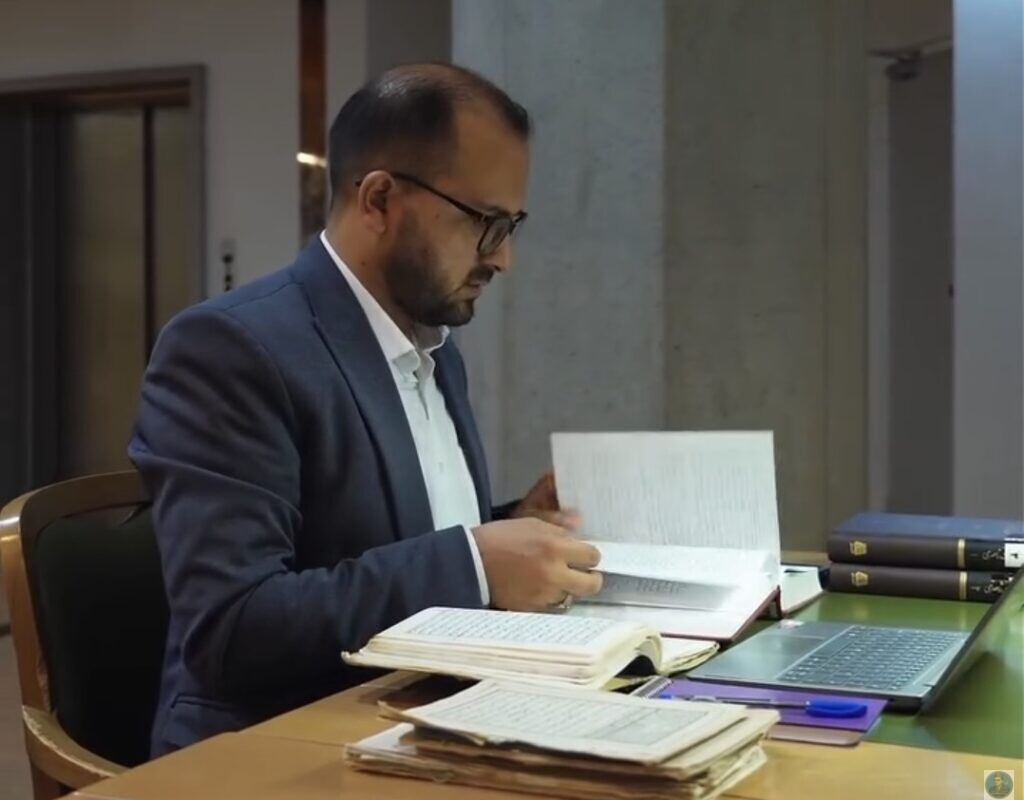
A Conversation at the National Library of Iran
Fifteen years ago, before I entered university, I came across a manuscript among family papers—a manuscript whose very title carried a world of history within it:
“A Treatise on the Lineage of the House of Shanasb: On the Sultans and Kings of Ghur and Bamyan, and Their Mamluk Rulers in India”
From that moment, the course of my research was transformed. What began as simple curiosity grew into a project that now shapes the greater part of my academic life: a critical edition of this manuscript, the collation of its three surviving copies, and the addition of a series of annotations grounded in library sources and field research.
But this manuscript is not merely a text. Within its lines are preserved fragments of the Tarikh-i Jalali—a medieval chronicle that has been lost to history, with no known copy surviving. Recovering these fragments opens a new window onto the history of Ghor and Khurasan.
 A Conversation with the National Library of Iran
In recent weeks, I had the honour of speaking at the National Library and Archives of Iran about this project, my research methodology, and the significance of the Library’s collections for historians.
This interview, made possible through the generous collaboration of colleagues at the National Library, is now available to view. In this short conversation, you will hear about how I first encountered the manuscript, the path of its critical edition, and the indispensable role the National Library has played in advancing this research.
Watch the Interview Clip
About the Project
This project, prepared as a critical edition and analytical study of the Āl-e Šanasb manuscript in two volumes, pursues three principal aims:
1. Critical Edition of the Text
Collation of the three surviving copies, establishment of a base text, and compilation of a full critical apparatus.
2. Recovery of the Tārīkh-i Jalālī Fragments
Identification, verification, and separate critical editing of passages attributed to the lost chronicle.
3. Analysis of Identity Transformation
Examination of the historical process through which a medieval lineage evolved into the four contemporary Aimaq communities—Tīnīmī, Fīrūzkūhī, Jamshīdī, and Hazāra.
Interactive Genealogy
Alongside the academic work, a complete genealogical chart of the Šansabānī lineage, compiled from textual, epigraphic, and documentary evidence, has been made publicly accessible through an interactive software application:
Acknowledgements
I am deeply grateful to my colleagues at the National Library and Archives of Iran—particularly those in the Documents and Manuscripts Department—who have supported me throughout this research. Their cooperation exemplifies what a scholar can hope for from a cultural institution: support, coordination, and genuine partnership.
Get in Touch
If you have questions about this project, the Āl-e Šanasb manuscript, or the Tārīkh-i Jalālī, or if you are interested in scholarly collaboration, I would be delighted to hear from you.
 Email: naderparwana@gmail.com
 Website: parwanaarchives.org